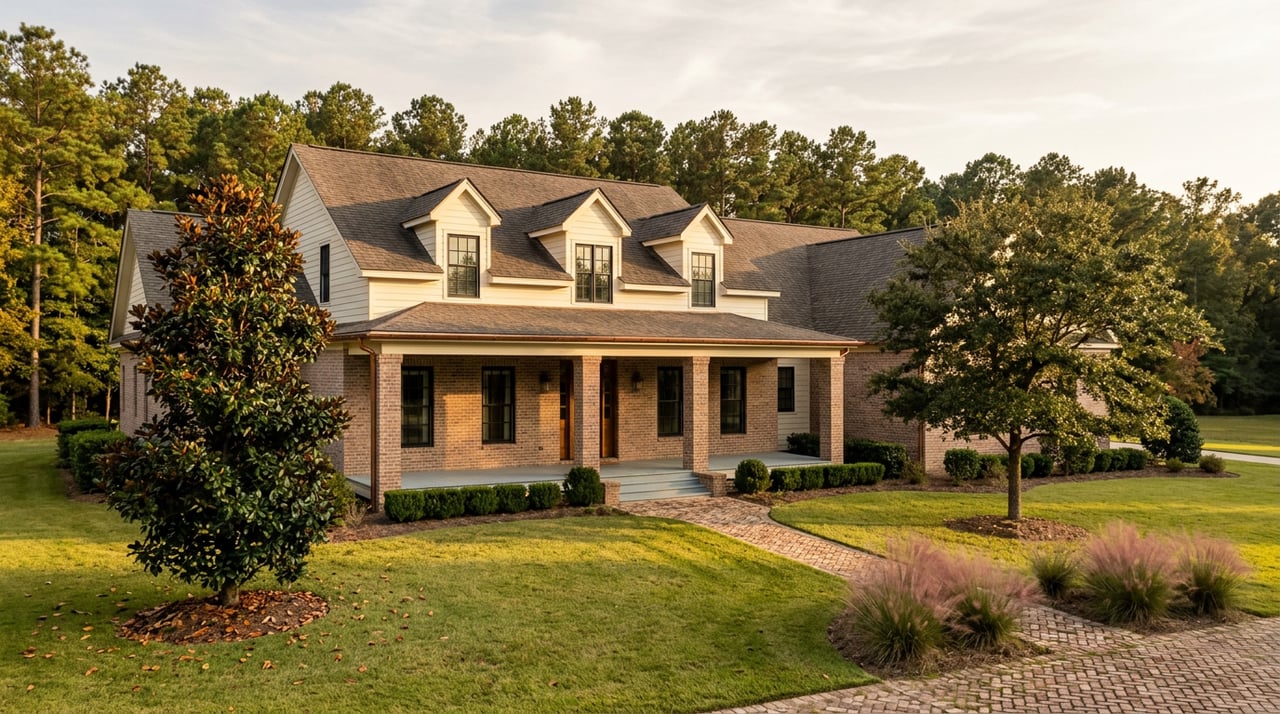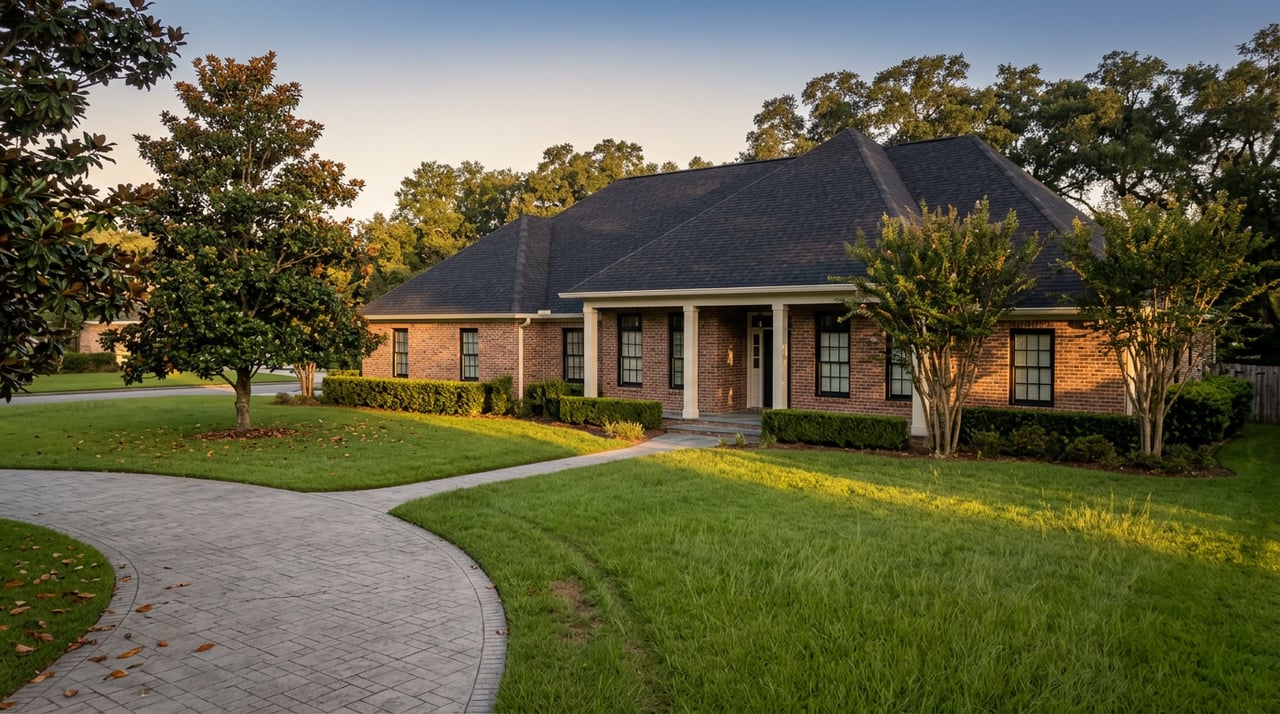
A military family stationed at Fort Moore stood in a driveway on the Georgia side of the river last spring, then drove fifteen minutes and stood in another driveway in Smiths Station. Same square footage, same builder grade of cabinets, same year built. On paper the two houses looked like the same decision wearing a different zip code. They are not. The gap between them shows up on the tax bill, in the paperwork the seller hands over, and in who is legally required to sit across the closing table. None of that appears in a listing photo.
Buyers comparing the Alabama side of the Fort Moore market to the Georgia side have usually already checked the median price on a portal. That number is the least useful thing to compare. The real decision points are the ones that only surface once you are under contract, and they are worth understanding before you fall in love with either driveway.
The Number the Median Price Won't Show You
Property tax in Georgia and Alabama is not calculated the same way, and that difference matters more than the millage rate itself.
Georgia assesses residential property at 40 percent of fair market value before applying the local millage rate. Alabama assesses residential property at 10 percent of appraised value before applying its own millage. That single structural difference, not the sticker price of either home, is why a comparable house on opposite sides of the river can carry a meaningfully different tax bill even when the local millage rates look similar on paper.
As of 2026, Muscogee County, Georgia carries an effective property tax rate of about 0.75 percent, with a median annual payment around $1,608. Russell County, Alabama, the county directly across the river and the closest comparison point with reliable current data, runs closer to 0.38 percent effective, with a median annual bill under $700.
Run that against a single hypothetical to see what it means in dollars rather than percentages. On a $400,000 home, the Georgia-side effective rate works out to roughly $3,000 a year. The Alabama-side effective rate works out to roughly $1,520 a year. That is not a rounding difference. Over a ten-year hold, it is close to $15,000.
| Muscogee County, GA | Russell County, AL | |
|---|---|---|
| Assessment ratio | 40% of fair market value | 10% of appraised value |
| Effective tax rate (2026) | ~0.75% | ~0.38% |
| Annual tax on a $400,000 home | ~$3,000 | ~$1,520 |
| Ten-year total | ~$30,000 | ~$15,200 |
Smiths Station itself sits in Lee County, not Russell County, and I don't have a Lee County specific figure with the same currency as the Russell County data above. What I can say with confidence is that Lee County operates under the same statewide 10 percent residential assessment ratio, which is the mechanism doing most of the work in that lower bill, not a quirk of Russell County alone. If you're comparing a specific address in Smiths Station to a specific address in Columbus or Midland, pull both counties' current millage rates before you sign anything. The assessment ratio tells you why the gap exists. The local millage rate tells you exactly how big it is on your parcel.
Same Buyer-Beware Rule, Two Very Different Paper Trails
Here is where most cross-river buyers get surprised, because the surprise doesn't show up until you're already comparing two purchase files.
Both Georgia and Alabama are caveat emptor states. Neither one requires a seller to hand over a formal disclosure form. But the practice on the ground diverges sharply. In Georgia, sellers aren't required by law to complete a disclosure statement, yet the Georgia Association of Realtors' Seller's Property Disclosure Statement is used so routinely that most buyers expect one and most agents build the timeline around it. It's optional in the strict legal sense and standard in the practical sense.
Alabama has no equivalent form in circulation at all. There is no statutory disclosure document, and there isn't a widely adopted voluntary one either. Sellers still have to disclose known material defects under common law, and Alabama court decisions have chipped away at pure buyer-beware over the years, but there is no piece of paper that walks a buyer through roof age, HVAC condition, or past water intrusion the way the Georgia form does.
Practically, that means a buyer moving from a Georgia contract to an Alabama one loses a document they may not have realized was doing real work. The due diligence period becomes the whole safety net rather than a backup to a disclosure form. Asking pointed, specific questions in writing, and getting a full inspection rather than a walk-through, carries more weight on the Alabama side simply because there's less paper to fall back on later.
Who Actually Sits Across the Table
This is the part almost nobody explains until closing day is on the calendar.
Georgia is one of a small number of states that requires an attorney to be physically present at closing. Alabama takes a different approach. Alabama law treats closing-related work, title examination, and deed preparation as the practice of law, so an attorney has to supervise the file, but a non-attorney, often a title company employee, can conduct the actual closing meeting where documents get signed. The buyer typically selects and pays for the closing attorney in Alabama, though that's negotiable between the parties.
So a buyer who closed on a Georgia purchase a few years ago and expects to see the same attorney sitting at the table for a Smiths Station purchase may instead sign in front of a title company representative, with the attorney's work happening behind the scenes. Neither approach is more or less protective. They're just different, and knowing which one to expect saves you from wondering on closing day whether something was skipped.
Timelines follow a similar pattern of "similar but not identical." Financed closings in Alabama commonly run 30 to 60 days once both parties have signed the contract, largely because the attorney has to complete title work before the file is ready to close. That clock starts at mutual execution, not at the moment an offer is made, which is worth keeping in mind if you're timing a move against a lease end date or a PCS report date.
What This Means If You're Weighing Both Sides of the River
Fort Moore sits inside what the Army itself calls the Tri-Community, spanning Columbus, Georgia and Phenix City, Alabama, with Smiths Station just beyond that core. Families choose either side for reasons that have nothing to do with tax bills: commute, school zone, lot size, proximity to post. But if the tax and paperwork differences above are new information, here's where they actually change your approach to a purchase:
- Pull the current millage rate for the specific county and municipality of any home you're seriously considering, on both sides of the river, before you compare monthly payments. The assessment ratio explains the gap. The local millage rate sets the exact number.
- On the Alabama side, don't assume a lack of disclosure paperwork means nothing to disclose. Ask direct, specific questions in writing and treat the inspection period as your primary tool, not a formality.
- Confirm who will be running your closing meeting before the date is set. If you're used to a Georgia-style closing with an attorney in the room, an Alabama closing run by a title company representative isn't a red flag, it's just a different lawful process.
- If you're on a PCS timeline, build in the full 30 to 60 day window for a financed Alabama closing rather than assuming a two-week turnaround. On-post housing at Fort Moore also carries waitlists that can run around six months, which is one more reason off-post decisions on either side of the river often need to happen earlier than families expect.
None of this makes one side of the Chattahoochee the right answer. It makes the comparison an honest one, based on what each side actually costs and requires rather than what the listing price implies.
A Few Questions Worth Asking Directly
Is Smiths Station in Lee County or Russell County? Smiths Station is in Lee County. Russell County sits closer to Phenix City. Both counties apply Alabama's statewide 10 percent residential assessment ratio, which is the reason Alabama-side tax bills tend to run lower than Georgia-side bills for comparable homes, but the exact millage rate still varies by county and municipality.
If Alabama doesn't require a disclosure form, can a seller just not mention problems? Not entirely. Alabama sellers still have to disclose known material defects under common law, and Alabama court decisions have narrowed pure caveat emptor over time. What's missing is the standardized form that walks through specific systems and history the way Georgia's does, which is why a thorough inspection matters more on the Alabama side.
Who pays for the closing attorney in Alabama? The buyer typically selects and pays for the closing attorney, though this can be negotiated between buyer and seller as part of the contract.
Comparing Smiths Station to the Georgia side of the market is a legitimate way to make a bigger decision smaller. The tax structure, the paperwork, and the closing process are three places where the two sides genuinely differ, and knowing the mechanism behind each one means you're comparing the actual cost and process of ownership, not just two numbers a portal happened to display next to each other.
If you're weighing a purchase on either bank of the Chattahoochee, from Smiths Station to Midland to Columbus itself, Tiffiney Graham has spent more than two decades working both sides of this river and both state's paperwork. Let's Connect and walk through what a specific address, on a specific side, actually means for your monthly payment and your closing day.