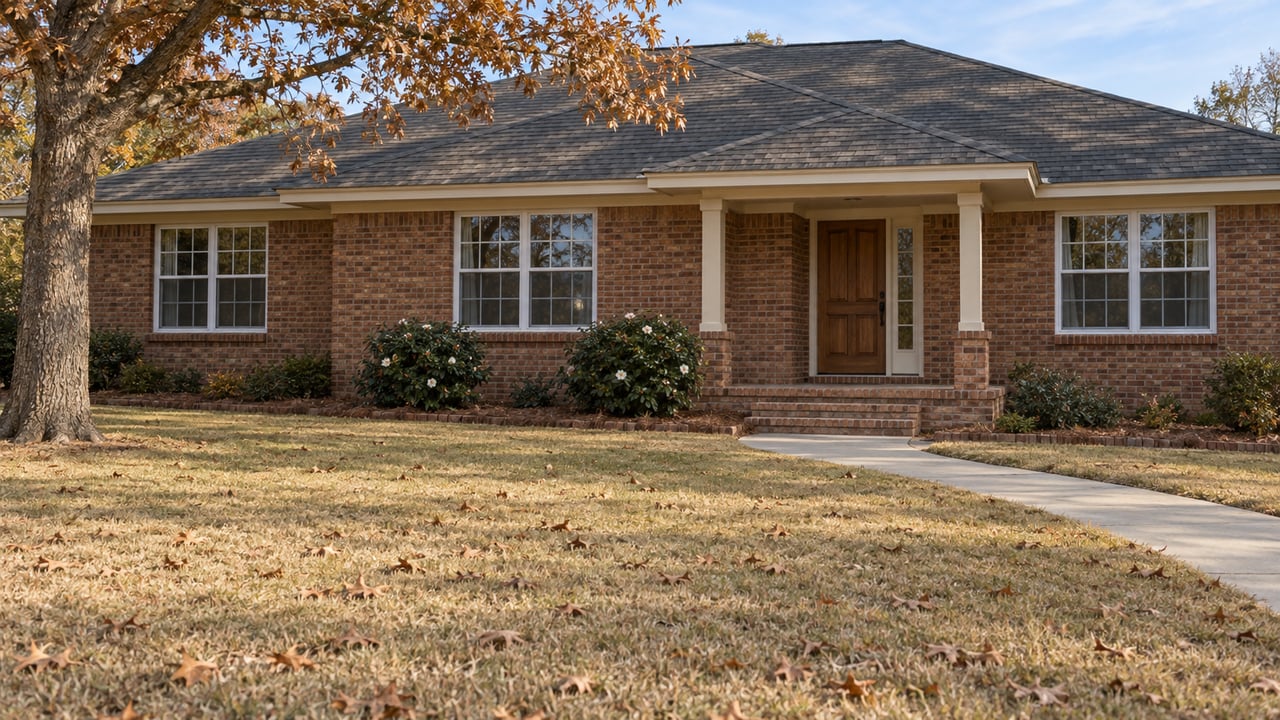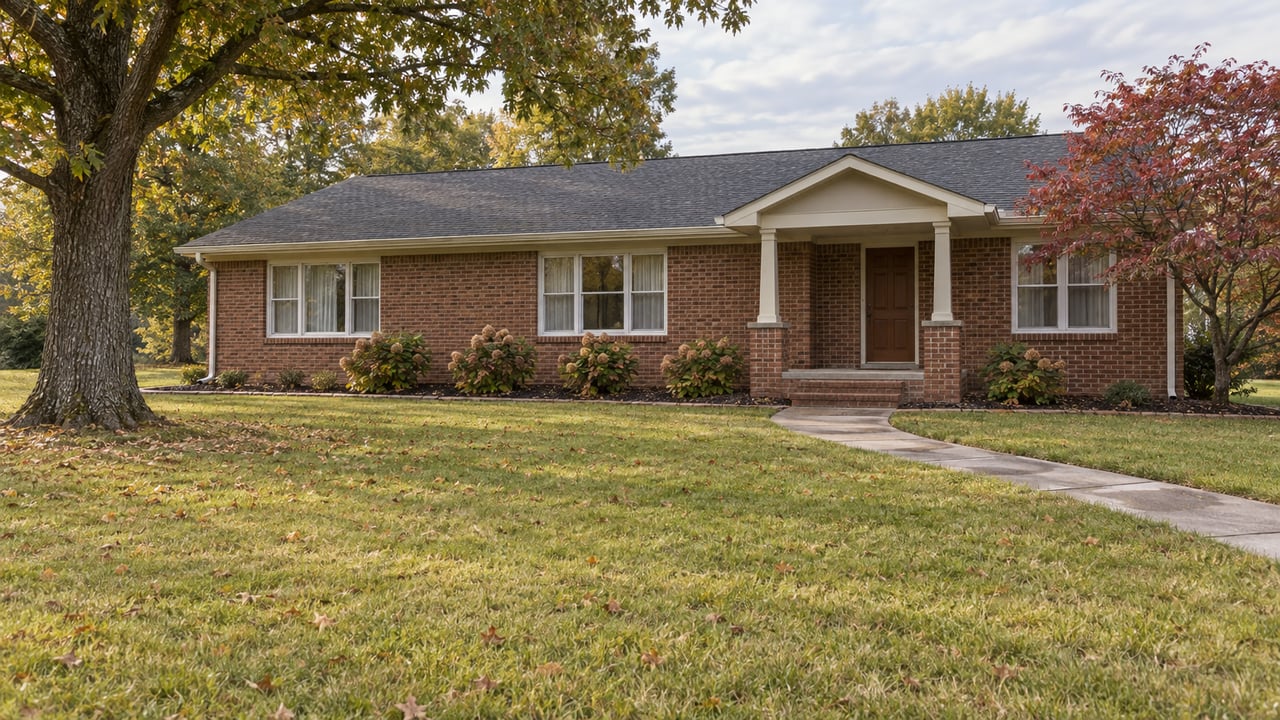
"Normally, the Authority will not fund expansions to serve residential developments."
That line comes from the published development rules of the Smiths Water & Sewer Authority, the utility the Lee County Commission chartered to provide water and sewer service around Smiths Station. If you're comparing homes here with homes in Phenix City, Columbus, or Auburn, keep that line in mind. Sewer reaches a Smiths Station street when someone pays to build it there. Most of the time that someone is a developer or a commercial project, not the utility acting for a neighborhood that wants a hookup.
So whether a house is on public sewer or a septic system mostly depends on how and when its land was developed. That one fact affects what you pay at move-in, what you pay each month, and whether the garage or pool you're planning will fit on the lot.
Who Pays for the Pipe
The Authority's rules say plainly that service "is provided as needed," not to every part of its territory. The rules list the ways the system grows into areas it doesn't serve yet:
- Grants or low-interest loans from government agencies, usually to reach low- and moderate-income areas.
- Industrial development that brings jobs.
- Private development, which the rules call "the primary vehicle." Developers who want water or sewer at their site pay all the costs of putting it in.
Put those together and the map makes sense. Pipe goes in when a grant, an employer, or a builder covers the cost. An older home on a large lot down a county road may not fit any of those, and it can stay on septic while new sewer lines go in a mile away.
Where the May Town Hall Pointed the Money
At a town hall this past May, local leaders laid out the next round of work. CNAW 2 reported that the Smiths Station Water and Sewer Authority had invested more than $22 million over the past several years. The report named two big projects: an $8.5 million sewer expansion along the U.S. 280 corridor and a proposed $5.1 million extension toward the flea market area.
According to the same report, officials said both projects were meant to support commercial growth and cut down on how often people leave the area for goods and services. One official put it this way: "When you leave, you're spending your tax dollars somewhere else. We want to capture that here." The report did not give a construction schedule, a funding source, or a road-by-road route for either project. The flea market extension was described as proposed.
An earlier project followed the same pattern. In January 2023, the Opelika Observer reported that the Smiths Station City Council approved a cost-sharing agreement with the Authority for a sanitary sewer expansion from Lee Road 243 to Highway 280. The project was framed as support for commercial development, and it also served residents along Lee Road 243, also called Railroad Avenue, and Summerville Road. Homes along a commercial route can gain sewer access along the way. Homes off that route usually don't.
Commercial plans are moving too. WTVM reported in May on plans for a Waffle House near Jack's, a new Circle K, and an addition to the city building. Highway frontage is getting the attention. If the home you like sits on a quiet side road, its sewer status probably isn't changing soon.
The Bill That Comes With a Hookup
Say the house you want is near an available sewer line but still on septic. The Authority's rules say that where sewer is available, customers sign up for sewer at the same time as water. The tap fee and impact fee are both due when you apply.
These are the Authority's last-published figures. The sewer rates on the posted schedule took effect April 1, 2019, so confirm current amounts with the Authority before you budget.
| Charge | Last-published amount |
|---|---|
| Sewer tap, standard 4-inch short-side lateral | $750 minimum |
| Sewer impact fee, per average equivalent connection | $2,500 |
| Residential sewer, first 1,000 gallons per month | $17.97 minimum |
| Residential sewer, each additional 1,000 gallons | $5.34 |
That comes to at least $3,250 just to connect. Other sewer taps are priced at the cost of materials and installation. The plumbing between the house and the lateral is extra. The rules require a licensed plumber to install that line. An Authority representative has to inspect the connection, and the line can't be hooked up until the county inspector's office approves it. If the connection gets buried before inspection, the installer has to dig it back up.
Don't confuse this with the $1,954 standard service tap package on the Authority's new customer page. That package covers a water tap and water impact fee only, not sewer. Sewer is billed on metered water use and appears on the same statement as water. A household that uses more water pays more for sewer too, which a septic home doesn't.
The 1,300-Foot Rule Behind Many Septic Subdivisions
The Authority's development rules also explain why so many Smiths Station subdivisions run on septic. If public sanitary sewer isn't accessible within 1,300 feet of a subdivision, each lot can use another method of sewage disposal, or the subdivision can use a community system, as long as it meets County Health Department standards. Where public sewer is available, the subdivision has to connect.
So a subdivision's distance from a sewer line when it was platted shaped every home built in it. Two neighborhoods with similar houses and prices can differ on this, and the listing photos won't show it.
On Septic, Part of the Lot Is Already Claimed
When a home relies on septic, Alabama's rules affect how you can use the land. The Alabama Department of Public Health says individual septic systems are used where municipal sewer isn't available or practical. Under Alabama Administrative Code rule 420-3-1-.10, a lot with an onsite system has to be big enough for the development, the disposal field, and a replacement field equal to 100 percent of the original, plus all required setbacks. Minimum lot sizes depend on when the lot was recorded. Swamps, wetlands, drainage areas, and frequently flooded ground don't count toward the minimum.
That replacement-field requirement means a backyard that looks open may already be set aside on paper. A pool, detached garage, or addition has to fit around both the working field and its reserved replacement. Rule 420-3-1-.09 requires an engineer-designed system in certain cases, including lots below the minimum size. ADPH says an installation permit application has to be filed with the county health department, and the permit issued, before a system is built. For small-flow systems, the application form is CEP-2.
If you're buying land to build on, ADPH recommends checking sewer availability first. Where an onsite system will be needed, a soil test or percolation test may be required, and whether the site works depends on soil, drainage, and lot size.
You don't have to guess where a home's system is. ADPH says owners or their agents can ask the local health department for septic records and permits, which may include an installation diagram.
Questions to Settle Before You Write an Offer
Since sewer lines follow commercial and developer projects, these questions are worth answering early:
- Is the home on public sewer or septic? Ask for a recent Smiths Water & Sewer Authority bill. A sewer line on the statement answers it.
- If it's on septic, is sewer available nearby? Ask the Authority directly about the parcel. Its territory and its actual service area are not the same thing.
- What would connecting cost today? Get current tap and impact fees from the Authority, plus a licensed plumber's quote for the service line.
- Where are the drain field and replacement area? Request the permit file and any installation diagram from the county health department before you plan additions.
- Is the lot near the U.S. 280 corridor? That's where the expansion plans reported at the May 2026 town hall were focused. Treat any change on a side road as uncertain until the Authority confirms it.
All of this is general information, not legal, tax, or financial advice. Utility fees and health department rules can change, so please confirm your property's situation with the Smiths Water & Sewer Authority, the county health department, and the right licensed professionals.
If you're weighing a Smiths Station home and want to know where its wastewater goes and what that could cost you later, I'm glad to help you get those answers before you sign anything. Reach out to Tiffiney Graham and let's go over the property together. Let's Connect.